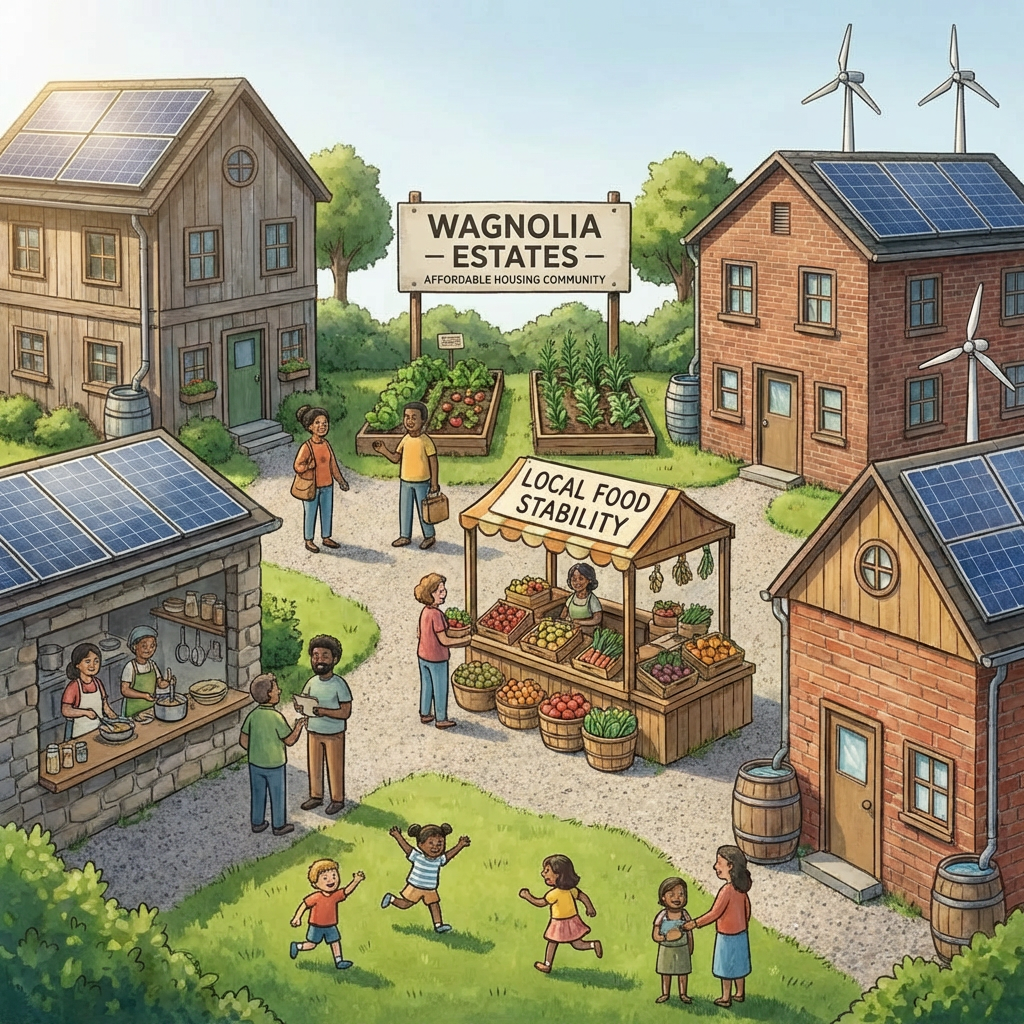

Real estate development often focuses on buildings.
We focus on systems.
At STARS — Supporting Thriving Actions Revitalizing Stronger — we design integrated real estate platforms that stabilize neighborhoods, protect capital, and create long-term community resilience.
We do not build isolated projects.
We build ecosystems.
The Problem: Fragmented Development Creates Fragile Communities
- Housing built without neighborhood services
- Food deserts next to residential developments
- Workforce housing disconnected from employment pathways
- Disaster recovery funding without long-term stabilization strategy
- Capital deployed without milestone discipline
Across Louisiana and the Gulf South, we see the same structural gaps:
Affordable housing alone is not enough.
Retail alone is not enough.
STARS and its affiliated development entities structure projects through phased, milestone-controlled capital deployment models.
Infrastructure alone is not enough.
Communities require layered systems — housing, food access, workforce development, compliance integrity, and disaster-readiness — designed from day one.
Our Model: Integrated, Phased, Capital-Disciplined Development
For example:
- Live Oak Manor (Waggaman, LA) is structured as a land-secured, phased duplex subdivision platform with mixed-use frontage, built with refinance takeout strategy and capital protection in mind .
- Bare Necessities Community Grocery operates as a nonprofit-aligned essential services anchor designed to eliminate food deserts while reinforcing neighborhood stabilization .
- Our broader multi-asset investment platform integrates HUD-backed financing, LIHTC structures, energy incentives, and layered equity to protect downside while maximizing community impact .
This is not speculative building.
It is structured deployment.
Housing That Performs — Financially and Socially
Affordable housing is often misunderstood as high-risk. Data tells a different story.
The 2025 Affordable Housing Credit Study analyzed more than 36,000 LIHTC properties nationally and confirms the long-term stability of well-structured affordable housing portfolios .
We design projects to align with:
- Louisiana Housing Corporation Rapid Rehousing guidelines
- Neighborhood Landlord Rental Program III compliance standards
- Federal LIHTC and HUD underwriting discipline
- Risk-managed debt coverage thresholds
- Structured operating reserves
Our approach integrates:
- Phased infrastructure deployment
- Clear draw schedules
- Controlled LTV positioning
- Compliance-forward documentation
- Defined exit ladders
We design housing that underwrites.
And endures.
Grocery-First Stabilization: Food Access as Economic Infrastructure
Food insecurity destabilizes neighborhoods.
Bare Necessities Community Grocery is structured not just as retail — but as stabilization infrastructure.
As outlined in our organizational capacity documentation , the store is designed to:
- Accept SNAP/WIC (as applicable)
- Improve reliable access to fresh produce
- Create local workforce pathways
- Anchor mixed-use developments
- Reinforce health and economic resilience
In our development sequencing, grocery comes early.
Because stabilization comes before speculation.
3RG: Disaster Response Integrated Into Real Estate
3RG (Readiness, Renovation, and Rescue Group) expands this ecosystem further.
Instead of reacting to disasters with temporary measures, we design:
- Housing platforms capable of rapid re-stabilization
- Equipment staging and logistics hubs
- Workforce training integrated into development
- Deployment-ready reconstruction teams
- FEMA-aligned operational structure
This is not a militia concept.
It is a lawful, scalable civilian disaster-response and reconstruction platform.
We believe resilience must be embedded — not improvised.
Why Phasing Matters
Traditional development often deploys capital upfront and hopes absorption follows.
We invert that model.
Each phase of our projects is independently monetizable:
- Land basis
- Entitlement enhancement
- Infrastructure installation
- Anchor stabilization (grocery/housing)
- Residential vertical execution
- Optional retail or expansion phases
This reduces duration risk.
Improves lender comfort.
Enhances equity protection.
And increases liquidity pathways.
Capital Discipline Meets Mission Integrity
Our capital stack designs frequently integrate:
- HUD 221(d)(4) structures
- LIHTC equity
- Solar and energy incentives
- Historic tax credits (where applicable)
- Blended nonprofit/for-profit structures
- Philanthropic and impact capital
- Structured waterfall protections
We design for:
- Downside protection
- Regulatory compliance
- Operating reserves
- Defined refinance triggers
- Controlled exit timing
Mission without discipline fails.
Discipline without mission stagnates.
We build both.
What We Are Really Building
We are building:
- Duplex subdivisions that become stable neighborhoods
- Mixed-use corridors that eliminate food deserts
- Workforce housing tied to real income pathways
- Disaster-ready hubs capable of regional deployment
- Capital platforms that recycle and scale
This is generational infrastructure.
Not short-term development.
The Future of Community Development
The next era of real estate will belong to platforms that integrate:
- Housing
- Food systems
- Workforce development
- Energy resilience
- Disaster recovery capacity
- Compliance integrity
- Capital efficiency
STARS exists to build that future.
If you are:
- A municipality seeking stabilization
- A lender seeking disciplined structuring
- A family office seeking resilient impact
- A philanthropic partner seeking scalable outcomes
- A federal-aligned disaster recovery stakeholder
We welcome aligned conversation.
Communities deserve more than buildings.
They deserve systems that last.
Leave a Reply